Curriculum
We create a structured path that teaches children how to think, not just how to play. Our curriculum is built on clarity, structure, and the steady sharpening of thought. Each child moves forward with a quiet confidence earned through real comprehension.
How We Designed Our Curriculum
A good chess curriculum is not a checklist of openings, tactics, or memorised shortcuts. It is a progression of thinking skills taught slowly, clearly, and with purpose. We’ve combined three elements that matter the most to young learners:
Conceptual clarity before speed or memorisation
More than learning the “correct” moves, children learn why moves make sense.
Pattern recognition is the foundation of strategy
We use simple visual patterns to build intuition, confidence, and decision-making.
Composed thinking and learning to stay calm in complexity
The ability to slow down, analyse, and choose well is at the core of every level.
Beyond chess, this is structured training for sharper thinking, steadier focus, and lifelong clarity.
Foundations of Chess
Welcome to the fascinating world of chess! At the beginner stage, our primary goal is to build a strong foundation that will set students up for success as they progress.
Focus Areas:
- Students will begin by learning about the board and how each piece moves.
- They will be taught to recognize key game situations like check, checkmate and stalemate.
- They will be taught about special and illegal moves to deepen their understanding of the rules.
- To begin developing their tactical skills, students will work on solving mate-in-one puzzles.
- Students will also learn the basics of chess notations to accurately read and record moves.
Curriculum Levels
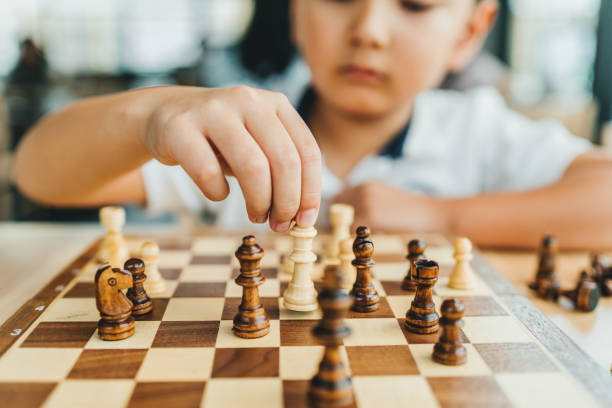
Our curriculum is divided into three levels: Beginner, Intermediate, and Advanced. Each stage builds upon the previous one in depth and skill development.
Beginner
Building foundations
This stage is perfect for children who are new to the game or understand only the basic rules.
The focus is on establishing a clear, calm introduction to chess thinking.
What your child learns here:
- Understanding piece roles and value
- Opening principles without memorisation
- Recognising simple patterns
- Spotting threats and safe squares
- How to complete a full game confidently
How it helps them:
- Play full games independently and confidently
- Recognise threats instead of reacting to them
- Spot basic tactical opportunities
- Build early decision-making habits
- Develop comfort on the board, which is the foundation for everything ahead
For families searching for chess classes for beginners, chess lessons for beginners, or a gentle entry point into chess in Singapore, this is the starting place that builds confidence without pressure.
Intermediate
Turning understanding into strategy
At this level, your child already knows how the game works. Now we teach them how to think two to three steps ahead.
Curriculum focus areas:
- Understanding initiative and planning
- Game Tactics: forks, pins, skewers
- Middle-game tactics: open vs. closed positions
- Decision-making under time
- Simplifying or complicating positions correctly
- Multimove puzzles, checkmates, and practical end-games
How it helps them:
- Read the board with purpose.
- Calculate variations without impulsive action.
- Recognise winning chances before they appear obvious.
- Playing structured, strategic chess.
- Transition from casual play into competitive awareness.
This level is ideal for children who want deeper, more structured chess lessons in Singapore and are ready to develop a strong strategic foundation.
Advanced
Preparing composed competitors
This level trains students who are ready for competition or want higher-level coaching without losing the values of calm, thoughtful play.
Advanced learning modules:
- Building multiple openings tailored to your child.
- Calculation training and variation analysis.
- Complex tactics and advanced positional concepts.
- Advanced endgame strategies.
- Post-game analysis with coach guidance.
- Psychological composure in competitive settings.
How it helps them:
- Make better decisions under time pressure
- Recover from mistakes without emotional collapse
- Play structured tournament chess with strategic intent
- Convert advantages accurately and finish games well
- Approach competition with calm, analytical confidence
For parents comparing high-level chess academies in Singapore, this curriculum offers the depth of competition training with the grounded, patient coaching your academy is known for.
Beginner
Building foundations
This stage is perfect for children who are new to the game or understand only the basic rules.
The focus is on establishing a clear, calm introduction to chess thinking.
What your child learns here:
- Understanding piece roles and value
- Opening principles without memorisation
- Recognising simple patterns
- Spotting threats and safe squares
- How to complete a full game confidently
How it helps them:
- Play full games independently and confidently
- Recognise threats instead of reacting to them
- Spot basic tactical opportunities
- Build early decision-making habits
- Develop comfort on the board, which is the foundation for everything ahead
For families searching for chess classes for beginners, chess lessons for beginners, or a gentle entry point into chess in Singapore, this is the starting place that builds confidence without pressure.
Intermediate
Turning understanding into strategy
At this level, your child already knows how the game works. Now we teach them how to think two to three steps ahead.
Curriculum focus areas:
- Understanding initiative and planning
- Game Tactics: forks, pins, skewers
- Middle-game tactics: open vs. closed positions
- Decision-making under time
- Simplifying or complicating positions correctly
- Multimove puzzles, checkmates, and practical end-games
How it helps them:
- Read the board with purpose.
- Calculate variations without impulsive action.
- Recognise winning chances before they appear obvious.
- Playing structured, strategic chess.
- Transition from casual play into competitive awareness.
This level is ideal for children who want deeper, more structured chess lessons in Singapore and are ready to develop a strong strategic foundation.
Advanced
Preparing composed competitors
This level trains students who are ready for competition or want higher-level coaching without losing the values of calm, thoughtful play.
Advanced learning modules:
- Building multiple openings tailored to your child.
- Calculation training and variation analysis.
- Complex tactics and advanced positional concepts.
- Advanced endgame strategies.
- Post-game analysis with coach guidance.
- Psychological composure in competitive settings.
How it helps them:
- Make better decisions under time pressure
- Recover from mistakes without emotional collapse
- Play structured tournament chess with strategic intent
- Convert advantages accurately and finish games well
- Approach competition with calm, analytical confidence
For parents comparing high-level chess academies in Singapore, this curriculum offers the depth of competition training with the grounded, patient coaching your academy is known for.
Rising through the Ranks

At the intermediate level, students build on their foundational skills and begin to understand the deeper tactical and strategic aspects of the game.
Focus areas:
- Students will learn to apply common tactical patterns, improve calculations and spot threats that lead to material or positional gain.
- They’ll work on multi-move puzzles, explore advanced checkmates and also strengthen their understanding of piece coordination and positional play.
This stage bridges basic skills with more advanced thinking for more competitive play.
The Advanced Conquest
Our advanced curriculum is designed for students ready to refine their skills and push boundries to become the best version of themselves.
Focus areas:
- Our students focus on mastering complex positions, multi-move combinations, and deep tactical sequences that challenge their strategic thinking.
- Emphasis is placed on a well-rounded understanding of all phases of the game such as opening principles, middlegame tactics and planning and endgame techniques.
Through advanced training and consistent practice, we prepare our students for high-level competitive play. Our goal is to develop not just strong players, but confident, disciplined thinkers who are ready to stand out as the best of the best.
Chess Curriculum Tracks
In-Person Curriculum Classes
Our in-person classes are available in Group, Doubles and Private formats, so every child receives the level of attention and personal guidance that fits their learning style. Our curriculum structure allows for live board demonstrations, peer games, and in-class reviews. Perfect for families looking for structured, community-based chess game classes.
Online Curriculum Classes
Our online group, doubles and private sessions are fully live and follow the same structured curriculum as in-person classes. Students receive coach feedback, game reviews, and guided practice. Perfect for parents searching for the best online chess lessons or convenient chess classes for kids from home that ensure quality without compromise.
Adult Learning Track
We run select chess classes for adults designed for working professionals and parents who want structured learning without rush or pressure.
Private Lessons
Private training is available for students needing personalised support or deeper preparation. These chess private lessons are customised to your child’s learning pace and goals. On request, we also offer Chinese chess classes for kids.
How We Measure Progress
We don't measure progress through trophies alone; we believe real progress is achieved through.
Our core indicators of growth include:
Critical Thinking:
Clarity of thought, evaluation, and pattern recognition.
Concentration:
Consistency under pressure and ability to stay composed in complex positions.
Confidence:
Decision-making without hesitation and emotional balance in wins and losses.
We believe real growth shows up in how a child thinks, behaves, and responds under challenge. That’s why we also observe:
- The ability to explain ideas and thought processes
- Sportsmanship, resilience, and maturity in play
- Composure during difficult positions or time pressure
Every few weeks, coaches run structured assessments, practical games, puzzles, and scenario-based exercises to ensure each child is developing at the right pace.
You receive clear updates, so you always know how your child is progressing.
Where Our Curriculum Leads
A child who completes our curriculum becomes:
A thoughtful decision-maker
A calm problem-solver
A confident learner
A composed competitor
The skills they learn will stay with them lifelong and help them in real-life situations. We believe this is the long-term value of chess when it is taught slowly, clearly, and with real intention.
Enroll in Our Curriculum
If you want your child to learn through a structured, thoughtful, and proven curriculum, we welcome you to join us.
Advanced Curriculum
Preparing composed competitors
This level trains students who are ready for competition or want higher-level coaching without losing the values of calm, thoughtful play.
Advanced learning modules:
- Building multiple openings tailored to your child.
- Calculation training and variation analysis.
- Complex tactics and advanced positional concepts.
- Advanced endgame strategies.
- Post-game analysis with coach guidance.
- Psychological composure in competitive settings.
How it helps them:
Make better decisions under time pressure
Recover from mistakes without emotional collapse
Play structured tournament chess with strategic intent
Convert advantages accurately and finish games well
Approach competition with calm, analytical confidence
For parents comparing high-level chess academies in Singapore, this curriculum offers the depth of competition training with the grounded, patient coaching your academy is known for.
FAQs
We believe progress isn’t based on age or how many classes a student has attended. We look for signs of deeper understanding, the ability to explain a move, recognise a pattern, or stay composed when a position gets difficult. When those habits become consistent, the child naturally transitions to the next level. We prefer thoughtful progress over rushed advancement.
Most programs focus on teaching moves. Our curriculum focuses on teaching thinking. Each concept builds deliberately on the last, creating a steady progression in clarity, analysis, and problem-solving. This is a system designed to develop strong learners, not just strong players and parents notice that difference quickly.
Not at all. The beginner curriculum is intentionally paced to help young students absorb ideas slowly and confidently. We also understand that every child learns at a different pace, and based on our experience, it usually takes around 4 - 6 months for beginners to comfortably grasp the foundational concepts. That's why we start with simple patterns, calm decision-making, and clear explanations. Children build understanding layer by layer, without pressure or rush. This is how early curiosity turns into real capability.
Yes. Our online lessons follow the same structured curriculum as our physical classes. Coaches demonstrate, observe, question, and guide just as they would in person. We also use professional chess software to illustrate ideas clearly, analyse games, and keep students engaged. Many families choose online sessions because they want serious, structured learning without the travel, and the quality remains uncompromised.